I first stumbled upon the work of Elliott Smith a few years ago while reading the oral history of the New York millenium music scene by Lizzy Goodman titled Meet Me in the Bathroom. Specifically, there’s an anecdote by Stuart Lupton of the band Johnathan Fire*Eater that goes…
“Right next to Max Fish (a bar in NYC) was this gallery called Alleged Gallery. One night you’d meet Jim Thirlwell and the next night you’d meet Chan Marshall or Elliott Smith. Elliott was around all the time. What a sweetheart. I didn’t know him that well, but the few times we did hang out really had an impact on me. Every time was just trying to talk him out of committing suicide. He’d be like, “Give me reasons.” And I guess you were supposed to bring up the Beatles.”
Or maybe it was in Kathleen Hanna’s memoir, Rebel Girl, where she probably brought up going to the same high school in Portland (though I don’t think they where there at the same time.) Or maybe he came up in Steve Turner’s memoir on Mudhoney and the Grunge scene called Mud Ride; that seems very likely. I’m pretty damn sure he comes up in Carrie Brownstein’s (Sleater Kinney) memoir Hunger Makes a Modern Girl. In one (or all) of these books I’ve read over the past few years Elliott Smith hung large as a presence and the broad strokes of his life were laid bare, from his impact on the musicians of the 90s and beyond to his heartbreaking suicide in 2003. It’s all a blur now, but I remember putting a Post-it note on the Elliott Smith file in my brain that read: Please Investigate Soon.
Putting all of these little puzzle pieces together while reading about beloved bands and discovering other artists I had no idea I’d missed out on, I was beginning to get scared at the thought of diving into the music of Elliott Smith. Not only am I 30 years late to the party, but there’s a cult of personality built up around him that seemed like a swamp too murky and deep to wade into. It’s be like diving into Kurt Cobain if you somehow missed out on Nirvana your entire life, not knowing the music, yet still being hyper aware of who they are as a icon. It’s a heady task and in my experience, it builds a very difficult wall to scale in order to get into the mindset of approaching the music with a fresh and open perspective.
So, I took a break, noted the Post-it in my brain from time to time and gave myself awhile to forget a lot of what I’d read. I was mostly successful with the forgetting (I am in my forties and the ol’ noggin just doesn’t retain like it once did), except there was one nagging detail. His death. Not just his death, but how it happened. That I couldn’t shake. I don’t need to share the details here. They’re easy to find. But suffice to say, every time I thought maybe I was ready to spin one of his records, it was always preempted by the thought, “He’s the dude that did that thing, and this is going to be sad.”
Fast forward to about a week ago when I was in a fairly morose mood and was fully in the “I miss the comfort in being sad” mode of playlist building on Spotify (to steal a song lyric from the aforementioned Cobain.) I have a bunch of bands or albums I go to in times like this, specifically stuff like The Eels, Daniel Johnston, Nirvana’s Unplugged album or David Bowie’s Low, but I’ve spun these so much over the past two decades that I needed something else. Something new. Some new sad.
“He’s the dude that did that thing, and this is going to be sad.”
So, I ripped off the mental Post-it and looked up Elliott Smith in Spotify and decided to finally interact with his music in the most boring way possible. I selected his top played song from their suggested list, Ballad of Big Nothing (with 264 million odd plays), put in on (noting the cover photo) and then brought up all of his albums to try and decide on one to dive into. Of the six albums he released, the one that was speaking to me the most was the album that Ballad of Big Nothing came off of, 1997’s Either/Or. There was something about the photo of Elliott looking up from under a trucker hat that just said, pick me. So I did.
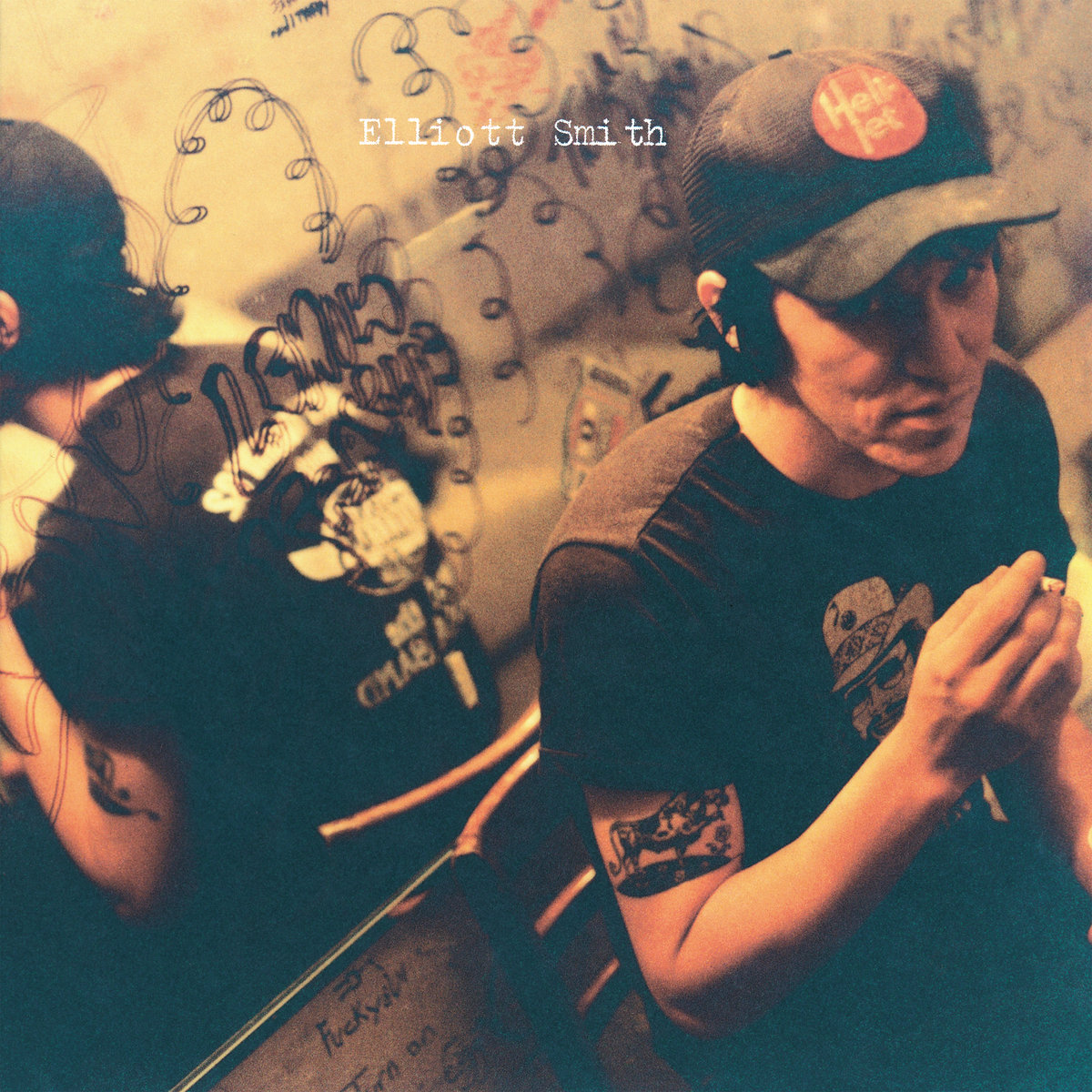
I was about 30 seconds into the song at this point, an intro and a verse or two before I felt the intense urge to hit pause and go back to the first track, Speed Trials. I wanted to give this album my full attention, and to spin it as it was laid out. So, I queued up Speed Trials and unconsciously reminded myself, “this dude killed himself.” It’s unfortunate, but impossible for me to shake. I took a breath, let the song start and proceeded to listen to the album in full, all thirty-seven minutes and twelve tracks of it. When the final song ended (the upbeat Say Yes), I was glad I’d dug in, but I wasn’t knocked on my butt or anything. There was something familiar about the music though, something that I couldn’t pin down. Something haunting, on the tip of my tongue.
So, then I listened to the album again.
And then again.
After the third spin the album began to seep into my mind. It was infecting me, digging in deep and taking root. The individual songs started to open up like flowers. This isn’t hyperbole. I’m one of the least “musical” people you’ll ever meet, besides that one dude in high school I knew who only ever listened to Vol. 2 of the Best of Queen on cassette, repeatedly, every single day. By the third go-round of Either/Or I was picking up on so may little things that were absolutely flooring me. For instance, the album is insanely intimate. Elliott’s vocals and acoustic guitar work sounds like it was all recorded in one take, right off the top of his head, yet effortlessly arranged so that any of the songs could easily be a Beatles hit if there was more production thrown on the tracks. That’s not a knock; it’s intended as a passionate compliment. Much like the genius of Daniel Johnston that somehow manages to shine through his lo-fi home recording and mental instability, Smith’s songs sound like genius only slightly refined. All of the string scratches in-between chord changes, his breaths between verses, the creaking of his guitar as he re-positions himself in a chair, are all audible and they’re beautiful. The closeness that those auditory tics add to the songs is really something else. There’s also something about his breathy singing, his voice harmonized with itself, just slightly offset, that makes me want to listen closer, the emotion making the journey from the server Spotify hosts these files on, though a million miles of wire, up to a satellite in space and down into my Bluetooth-linked earbuds. He sounds like he really needs me to hear his words, and boy do I ever want to.
I was now, officially knocked over onto my butt and asking myself where the hell Elliott Smith has been all my life. Why the fuck did I wait to dig into this music. Why do I always go back to the Pixies, Pavement, Yeah Yeah Yeahs, Ween and that damn third Jimmy Eat World album all the time instead of trying new (to me) albums like Either/Or? So, I went to Bluesky to post about my Elliott Smith discovery and in conversation with some friends I was reminded that I was not, in fact, a Smith virgin as I had assumed.
All of those books that I mentioned at the top, were just reminders for me of who Elliott Smith is (was) apparently, because as I learned, he’s basically responsible for the majority of the music in the movie Good Will Hunting. That was the first ghost that was haunting me when I listened to Either/Or because so many of the soundtrack selections come from that album. But, on top of that, his song Needle in the Hay was selected by Mark Mothersbaugh and Wes Anderson to score the poignant scene in the Royal Tenenbaums where Luke Wilson’s Richie Tenenbaum attempts to commit suicide. That scene, and that song, live rent free in the dark basement of my mind, and I had no idea who had written it, or that I was already infected by Mr. Elliott Smith. Thank god for cinema and folks with great taste in music.
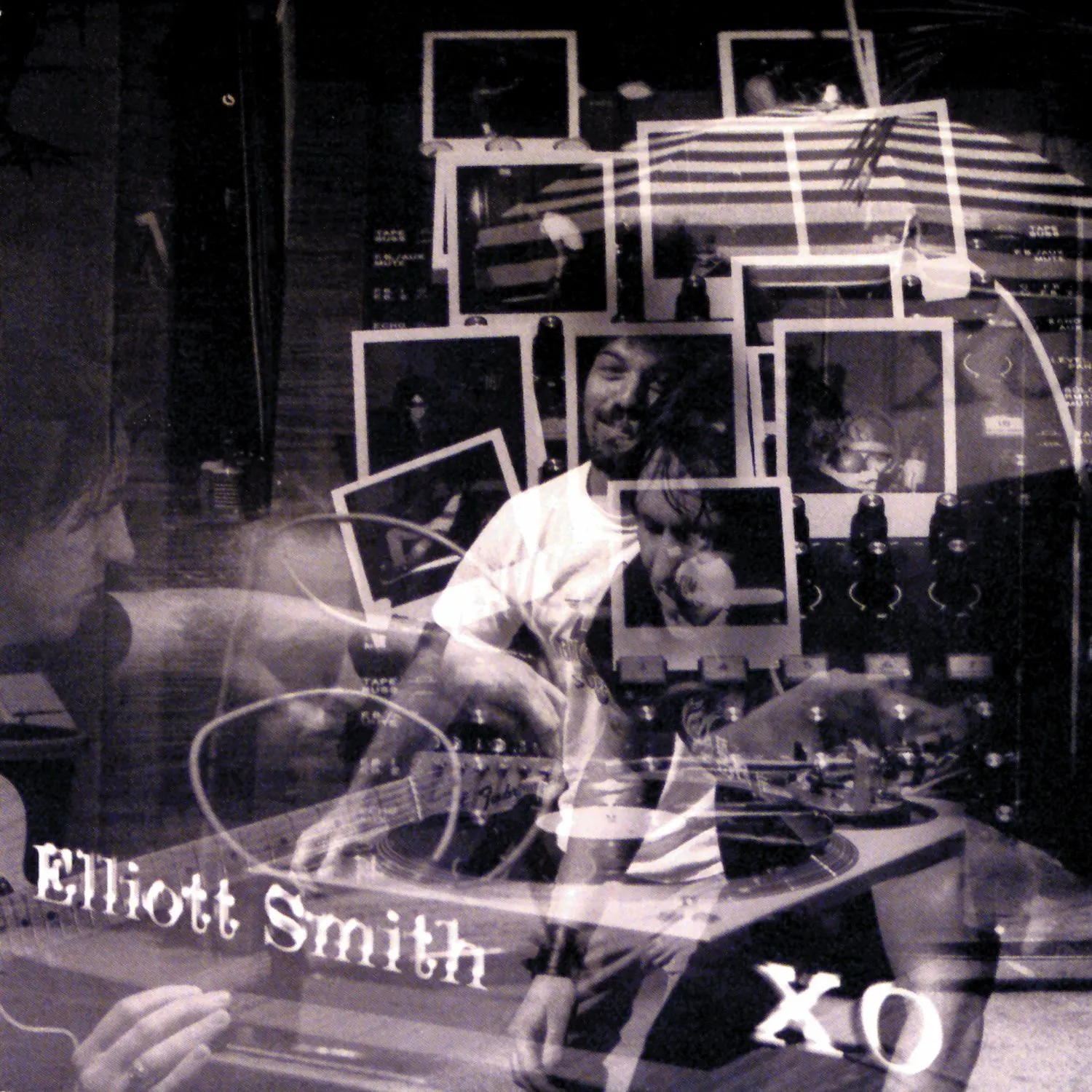
Over the past week I’ve listened to a metric ton of Elliott Smith’s work. In addition to spinning Either/Or twelve times, I’ve also listened to four of his other solo albums, all three of his band Heatmiser’s records, and his 1998 follow-up to Either/Or titled XO, is closing in on wrecking me as much as the former. I’m at the point where the first thing I put on during the commute to work is Smith’s work, and I’ve started seeking out more information about Smith and his life. For instance, I just sought out and watched Heaven Adores You, a documentary about his life and career and have already started adding biographies to wish lists, as well as plunking down a bit of money to pick up Autumn de Wilde’s photo and interview compilation titled simply Elliott Smith.
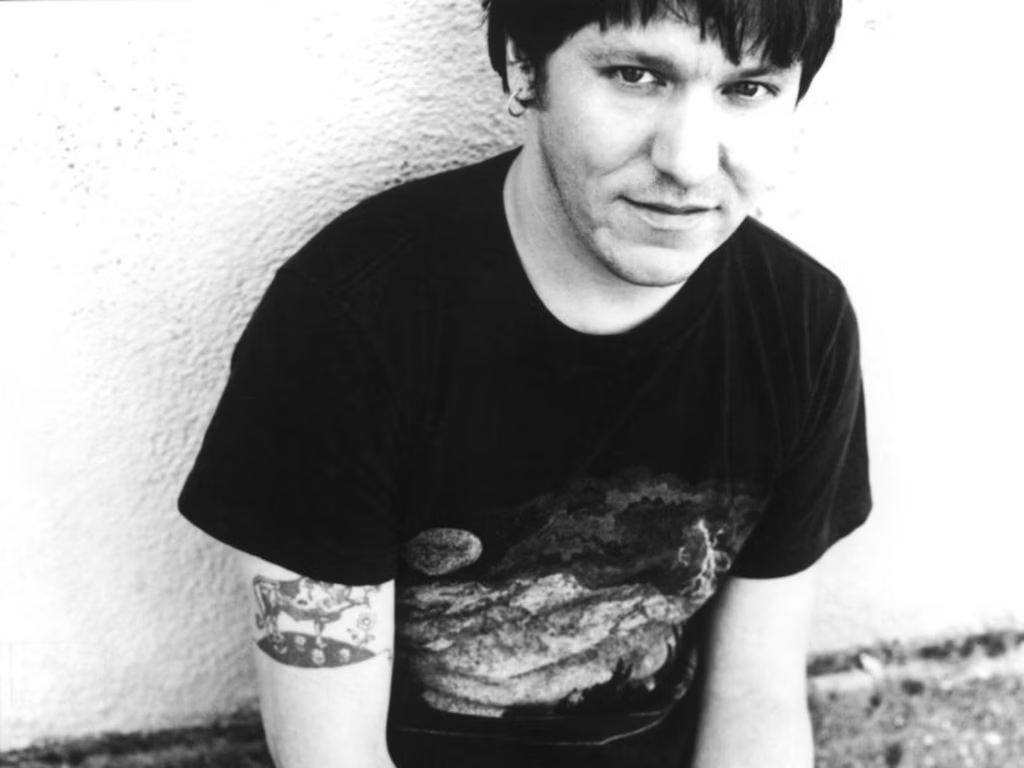
It seems so cliché, being a white dude into indie, alternative and punk rock falling hard for Elliott Smith. But dammit, I’ve fallen hard for Elliott Smith. If there’s been one thing that I’m truly thankful for over this past week it’s that at some point, whenever I queued up one of his albums, I stopped saying the mantra of “this dude killed himself”, and instead just let the music wash over me. In fact, while I was watching the documentary I was so sucked into the journey of his life from a gifted child who took piano lessons, to his leaving home as a young teen to live in his adopted city of Portland and starting a million bands, that I even forgot how this story ended for a few minutes. When the film addresses his demise, it hurt like a fresh wound.
One of the things that I love so much about his music is that it’s sad, but it’s not just that it’s sad. It’s beautiful and melodic, and often times kind of happy and upbeat. But it’s so inviting. Putting on his albums sounds like a friend using me as a sounding board for a new project. It feels new and raw, delicate and so damn real. I have an overwhelming desire to meet him, if just for a second so that I could say thank you and wave before getting the fuck out of his way so he wouldn’t think I was weird or obsessed. Which is also my odd way of paying him a complement, because I usually don’t want to meet anyone famous or inspiring to me. I really, sincerely, want to give the dude a fucking hug.
I’m so glad I finally gave his work a chance, and it will definitely enter into the rotation of albums I lean on for the rest of my life. It was exactly the right amount of “comfort in being sad” that I needed, and a multitude more.