This weekend the wife and I took the kids to an evening screening of the new Masters of the Universe flick and I was both heartened to see the franchise treated so well, and kind of sad to see that the filmmakers kind of missed the point of one of my favorite iterations of the story, the Filmation cartoon. I know there’s a ton of debate on various He-Man related fan sites and sub-reddits as to what stands as the ultimate version of the story and characters. Between the toys, the mini-comics that accompanied them, the Filmation cartoon series, or the various other cartoons over the past 40 years, there’s a lot of debate on who He-Man is (is he simply the Defender of Eternia with no alter ego, is he the idealized form of Prince Adam who is imbued with the power of Greyskull, or do Adam and He-Man exist as two separate entities that inhabit a single body in tandem? There’s also debate about who created the characters and world, Mark Taylor or Roger Sweet? Or Both? Or whether or not their contributions combined are more important than the cartoon that would shortly follow. I’m not going to say any one opinion is right or wrong, just that for me and my experience with the franchise as both a kid who was five years-old when the toys hit and six when the cartoon debuted, that the amalgamation of the toys and cartoon are how I see the story. I was too young to really read the mini-comics, so even though I had the toys before the cartoon hit the airwaves, the Filmation versions of the characters are how I see them in my mind.
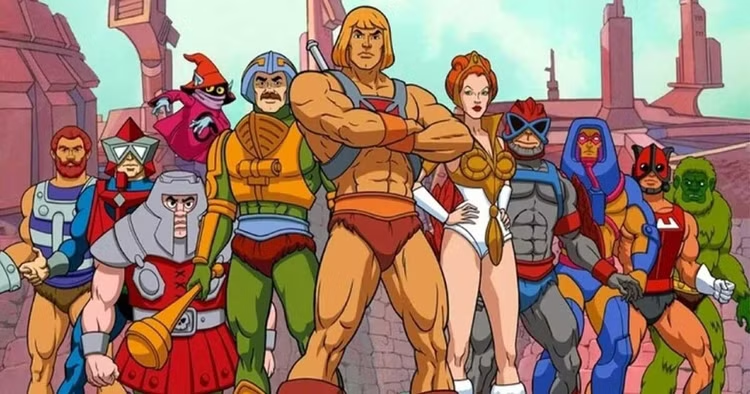
And how I see them is imbued with the fantastic powers of the gods. Brawn, might, able to literally move mountains and obliterate boulders with a single punch, as well as being equipped with fantastic weaponry, yet at their heart the heroes are almost all non-violent, intelligent, moral and go out of their way to find peaceful resolutions to combat and obstacles thrown in their way. He-Man is a musclebound brute who uses his strength to hold his friends and family tight, and to keep a stiff firm arm held outward to hold off the villains so they’re just out of the range of hurting the people of Eternia. This was, at the time, seen as a limitation set forth by broadcasting standards, parent’s groups and the expert opinions of psychologists who were hired to figure out what sort of issues violence in cartoons would raise in their young audience. And, as I see it now as an adult, a challenge that the creatives at Filmation chose to lean into as opposed to fight against and try to subvert. And there’s a beauty to the moral, non-violent aspect of that cartoon that for sure helped a large chunk of my generation find their moral footing at very impressionable ages.
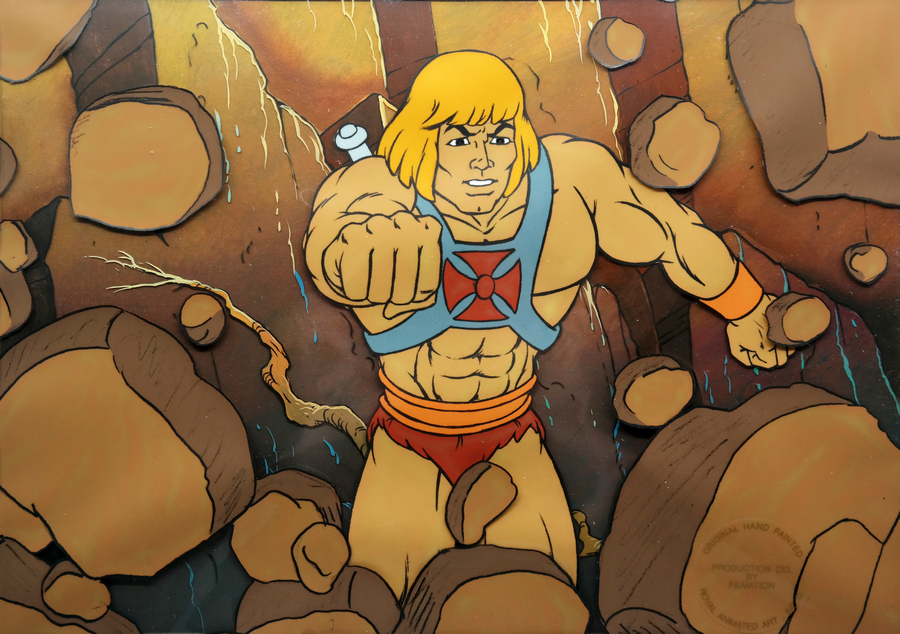
He-Man using his might to punch some rocks
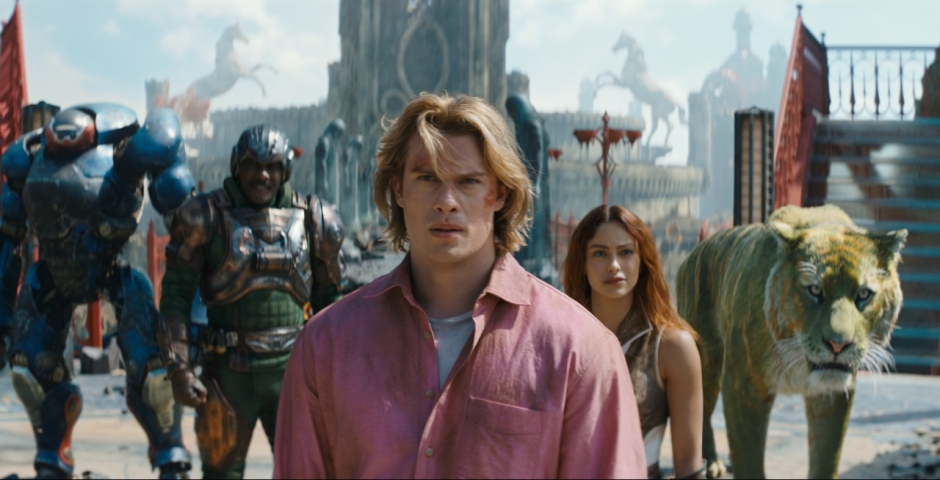
So it was interesting watching the new film and seeing the writers, designers and director painstakingly construct a new story that hangs the character of Adam completely and totally on the framework of the Filmation version. The new movie showcases Adam as a dreamer who doesn’t want to learn sword-craft or really even participate in his mandatory combat training. He’s shown as a disappointment to his father when he’s bested in combat, and then even humiliated by having to spar with him only to be defeated again. Later, though he’s chosen by the Sorceress to wield the vessel of the Power of Greyskull and is (more or less) entrusted with protecting it while being flung by interdenominational wormhole to the relative safety of Earth, Adam is showcased as becoming an adept human resources employee who specializes in conflict resolution. He literally spends his time trying to find ways to resolve problems by smart problem solving. This was not a accidental coincidence. Like the Filmation crew before them, this team leaned into that version of the character.
In fact this reminds me of a strange editorial on He-Man and the Masters of the Universe that I wrote about well over a decade ago, one in which a mother was championing the idea that He-Man was killing the masculinity of a generation of young boys…
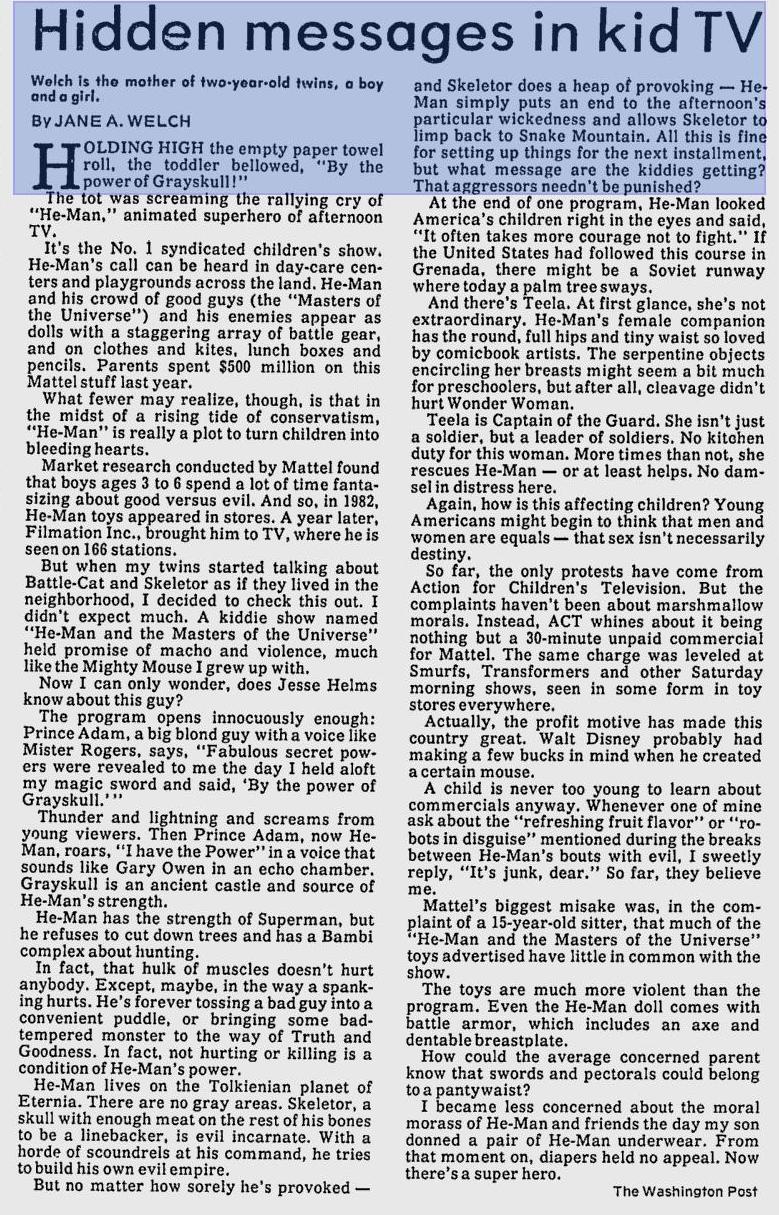
First off, though Welch’s editorial reads like the semi-crazy ranting that tends to get buried in the lifestyle section of a local paper and is really yesterday’s news on the day it sees print, the story actually caught on. While doing a bit of research in trying to pin down the impact of Welch’s rant I came across a number of other papers from all over the country that picked up the editorial, so this was most likely Welch’s fifteen minutes. So what is so crazy about Welch’s commentary? Well for starters she takes the unique stance that Filmation’s He-Man cartoon has the potential to turn her then two year-old son into a bleeding heart pantywaist! For once, a parent stands up and says that there isn’t ENOUGH violence in a cartoon and that morality of avoiding fighting and violence is downright un-American. Welch might just be a long lost relative of Roger Sweet, the initial creator of the Masters of the Universe toy line for Mattel, as she seems to closely mimic his feelings towards the Filmation version of the He-Man story line.
There are a couple things that I find really interesting in the editorial including the idea that the cartoon and toy line differ so much in execution and tone. Whereas the toys were designed in the image of fierce warrior barbarians with axes, swords, and rippling muscles, the cartoon, which uses most of the same imagery, all but ignores these violent aspects of the characters in favor of moralistic, fable-like storytelling where He-Man is more likely to throw Beastman in the mud then physically harm him in any way. Though this dichotomy is apparent in most cartoon merchandising, it points to the underlying issue that’s really been bugging me about how my generation appropriates pop culture icons.
What I’m seeing is an issue of potential and the wish fulfillment of seeing that potential realized based on the idea of “how things work in the real world.” So when we have a character like Superman/Clark Kent who is ripped with an unstoppable alien musculature powered by Earth’s yellow sun and very rarely unleashes the full brunt that he can dish out, it’s understandable to want to see this potential released. What’s more maddening than a cocked gun that isn’t fired, right? People want to see Superman punch a fist-sized hole right through Lex Luther’s head, because A) he’s got it coming, B) Superman could totally do it if he wanted to, and C) in the “real world”, if a Superman existed, he probably would do it for the “greater good”. I think the quest set in front of the writers of this type of fiction is how to balance character potential and relatable character depth without breaking the character. As an aging audience, I think more and more we want to see these characters broken. As children everything is still new to us and we’re content with going along on the adventures that have limitless possibilities, and this makes serialized stories an ideal experience. As adults we develop a different perspective on life. We don’t see limitless possibilities, we see stark reality and the eventually of our own mortality. Add to this the possibility of a long time familiarity with a character and it’s easy to see how we can take them for granted and want to go to that next step, the step that changes that character forever.
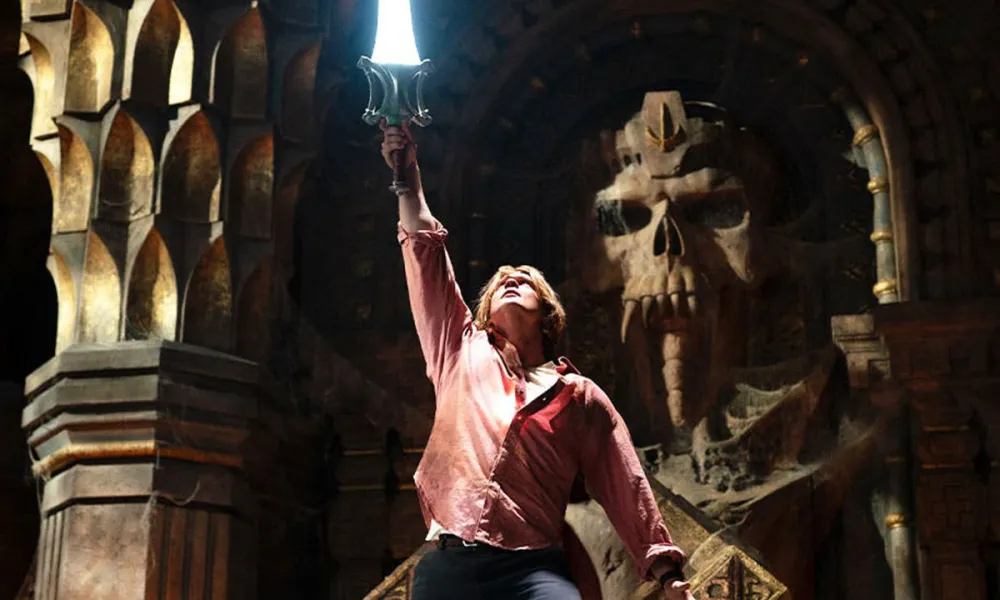
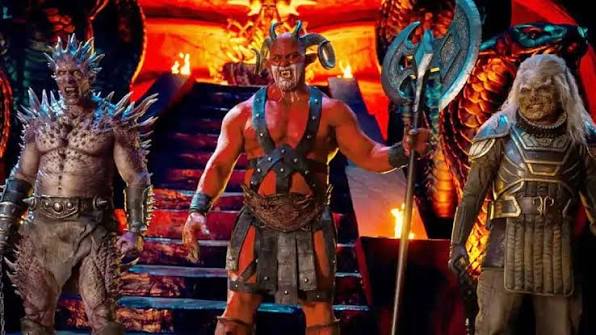
So, in getting back to the new MOTU film, it was kind of sad and frustrating to watch them use all that potential to echo the Filmation ethos, and completely undermine it time and again in the film by stressing and boldly underlining that though Adam tries to use non-violent conflict resolution to find ways to beat Skeletor and his minions, the only solution that works is straight up violence and killing. In a sequence that homages the Johnny Cage versus Goro fight from the 1995 Mortal Kombat film, Adam is facing off against Goat Man, a crimson demonic brute that towers over He-Man and eventually fights him in the open maw cave of Snake Mountain. Whereas Johnny Cage realizes that he can’t beat Goro with brute strength and his martial arts skills, and instead tricks him to come out onto a ledge and then knocks him over the edge (utilizing smart problem solving and violence), Adam straight up rips off one of Goat Man’s horns and then stabs him in the neck, effectively murdering him before knocking him off of Snake Mountain into the active lava rivers below.
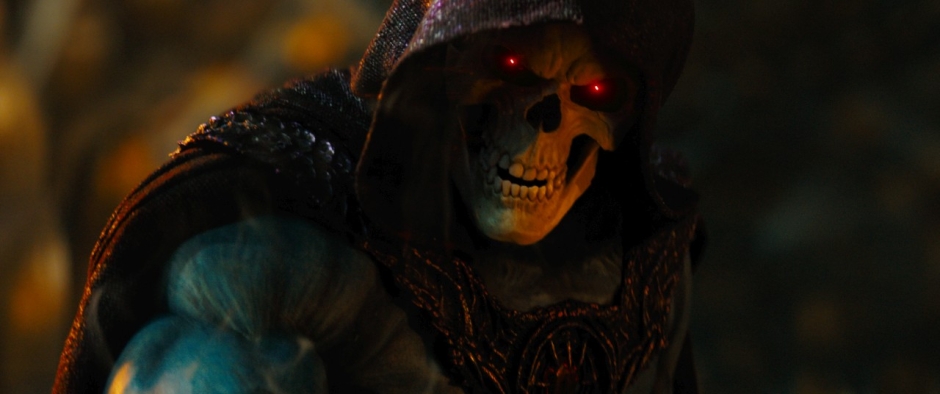
Even after a sequence where Adam’s outburst of anger and violence culminates in the accidental death of his father, he still leans on his sword and his fists to get him out of every battle he faces. Even as he’s literally scolding Skeletor during the end of the film, boldly informing the skull-faced bastion of evil that even though he possesses the might of the gods, he chooses not to wield it with violence, he’s ironically delivering the speech in tandem with dealing a bunch of hardcore body blows to the villain, punching him almost to death, before destroying his Havoc staff and actually killing him. This movie had an opportunity to deal a striking blow in favor of non-violence by finding a way for Skeletor to defeat himself going even harder on on the concept that his staff is what keeps him alive, and that destroying it would in turn destroy him. What if, in another nod to Mortal Kombat, Skeletor uses him Havoc staff to imprison the life essence of those he kills which powers his own immortality? This would give Adam a reason to destroy the staff, to free the souls of those who are trapped inside, and dealing Skeletor a death blow, not directly, but at a form of karmic justice for the lives he’s taken. It was right there, already built into the story.
But I am a very specific kind of He-Man fan, one that recognizes what the show and character was when it was originally conceived, appreciates it for what it was, and doesn’t need it to “grow up” and become more adult for me to embrace it as an adult. No amount of “fisting”, “give ’em head”, or “sword dangling between legs” jokes improve my adult appreciation of the concept, I still just love the 80s version of the franchise as an adult. It’s not a guilty pleasure or just nostalgia taking over my better senses. I’m also a dude that loves twisted horror films and cheesy, super violent b-movies, as well as the subversive works of John Waters and David Lynch AND a good fisting joke. I just don’t need He-Man to be something else for me to enjoy it, and sadly, it seems like with every new iteration, it’s pushed further and further away from what it was. But I also recognize that I’m in the minority, and that honestly, these kinds of films aren’t being made for me. Though, considering the nostalgia-ridden essence of the movie, and the fact that I’m seeing first hand the the current generation of kids aren’t glomming onto the franchise no matter how hard the toys are pushed in Wal-Mart and Targets, I’m not sure exact who these flicks are made for anymore.